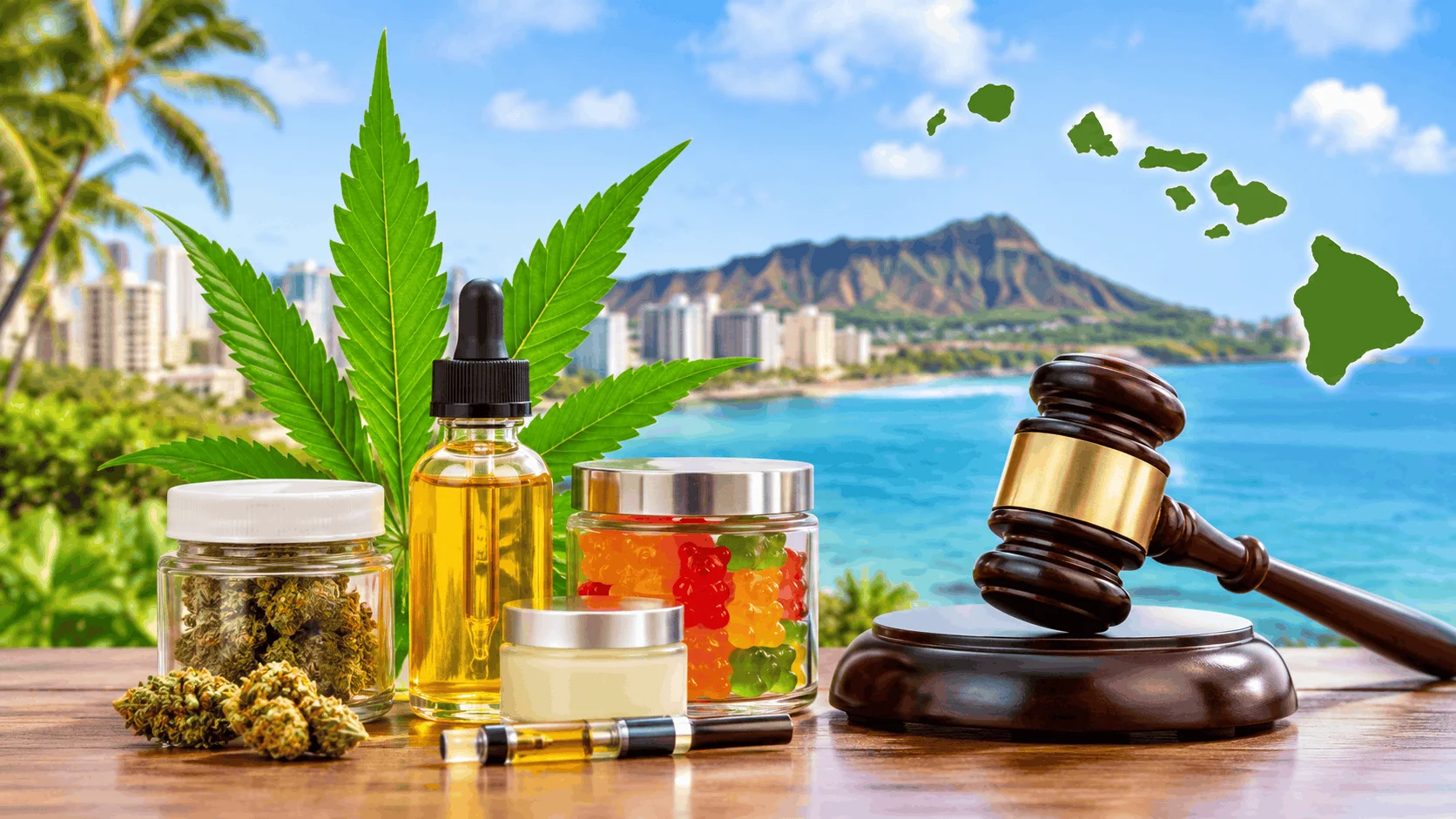
Hawaii’s hemp regulations have become more detailed in 2026, making it important for retailers and consumers to understand which products can legally be sold in the state. From hemp-derived CBD products to gummies, tinctures, and topical applications, not every product marketed as hemp is permitted for sale.
The state’s updated requirements cover approved product formats, THC limits, laboratory testing, labeling, packaging, and business registration. Retailers must also understand which products are prohibited, even if they contain little or no THC.
This guide explains the Hawaii hemp laws 2026, including the products retailers can still sell, the restrictions they must follow, and what consumers should check before purchasing hemp products.
What Changed Under Hawaii's 2026 Hemp Rules?
Hawaii regulates hemp products separately from medical cannabis products. Although hemp and cannabis come from the same plant, they are subject to different legal requirements.
One important change came through Act 269, Session Laws of Hawaii 2025, which established a registration system for manufactured hemp product retailers and distributors. The updated requirements took effect in January 2026, with the Department of Health (DOH) providing a grace period for businesses to register.
The DOH announced that statewide enforcement of the retailer and distributor registration requirements would begin on July 1, 2026. The updated interim rules for hemp processing and manufactured hemp products also became effective on January 28, 2026.
These changes mean businesses must pay attention to more than a product’s THC percentage. They must check whether the product format is permitted, whether it meets the state’s safety requirements, and whether the business needs a Certificate of Registration.
Which Hemp Products Can Retailers Legally Sell in Hawaii?
Hawaii allows certain manufactured hemp products for human or animal use, provided they meet all applicable state requirements. Permitted product formats include topical applications and specific types of edible products.
Here are the main categories identified in the state’s guidance.
1. Topical Hemp Products
Hemp products designed for application to the skin or hair are permitted when they meet Hawaii’s requirements.
Examples may include:
- Hemp-derived topical creams
- Lotions
- Balms
- Other compliant skin or hair products
These products must meet the applicable THC, ingredient, testing, labeling, and packaging requirements. Their total THC concentration must not exceed 0.3% by weight.
2. Gummies, Tablets, Capsules, and Similar Edibles
Certain manufactured hemp products intended for oral consumption are permitted in specific formats. These include:
- Gummies
- Tablets
- Capsules
- Powders
- Softgels
- Gelcaps
However, these products must comply with strict total THC limits. For example, a gummy, tablet, capsule, packet of powder, softgel, or gelcap may contain no more than 1 mg of total THC per serving. A multi-serving container may contain no more than 5 mg of total THC.
The product must also meet the state’s ingredient, testing, labeling, and child-resistant packaging requirements.
3. Oil-Based Hemp Tinctures
Oil-based tinctures are another permitted product category. Hawaii’s requirements specify that these products must use an oil-based formulation.
The current limits include:
- No more than 3 mg of total THC per serving.
- A maximum bottle volume of 1 fluid ounce.
- No more than 85 mg of total THC in a 1-ounce bottle.
- Total THC concentration must not exceed 0.3% by weight.
Retailers selling these tinctures must follow the applicable age restriction and identification-check requirements. The DOH guidance states that a retailer selling only qualifying tinctures does not need a Certificate of Registration for that product category.
4. Hemp Beverages
Certain manufactured hemp beverages are also permitted, subject to specific limits.
According to Hawaii DOH guidance:
- Each container must hold between 6 and 12 fluid ounces.
- Total THC must not exceed 0.5 mg per container.
- Total THC concentration must not exceed 0.3% by weight.
Beverages must also meet applicable ingredient, laboratory testing, labeling, and other safety requirements.
Retailers should not assume that every drink marketed as a CBD or hemp beverage is automatically permitted. The product must meet the state’s requirements for this category.
Which Hemp Products Are Prohibited in Hawaii?
Hawaii’s hemp product regulations also identify product categories that cannot be sold, held, offered, or distributed in the state. A low THC concentration or a label claiming compliance does not make a prohibited product legal.
The following categories are specifically identified in the DOH guidance.
1. Hemp Flower and Hemp Pre-Rolls
The sale of viable hemp seeds, hemp flower, and hemp leaf material is prohibited. This includes hemp pre-rolls, regardless of the labeled THC or THCA percentage.
The hemp flower ban in Hawaii is an important distinction for retailers because a product cannot be sold simply because it is described as low-THC hemp.
2. Hemp Vape Products and Cannabinoid Concentrates
Hawaii prohibits vape cartridges, concentrates, and similar products that claim to contain cannabinoids, including CBD.
This means retailers cannot assume that a CBD vape cartridge is permitted because it does not contain conventional marijuana or a high level of THC.
The restrictions apply to cannabinoid-containing vape products, not just products marketed as high-THC cannabis.
3. Certain Cannabinoid-Infused Foods
Hawaii prohibits foods that claim to contain cannabinoids, including examples such as:
- CBD chocolate
- CBD-infused honey
- Cannabinoid-infused baked goods
- Certain CBD candies
It is important to distinguish these products from specifically permitted manufactured hemp formats, such as compliant gummies. A product’s marketing description alone does not determine whether it is legal. Its actual formulation and product category must meet the state’s rules.
4. Products Containing Prohibited Synthetic or Artificially Derived Cannabinoids
Hawaii prohibits manufactured hemp products containing artificially derived or synthetic cannabinoids.
The DOH identifies examples including delta-8 THC, THCO, HHC, and CBN created from a hemp-derived cannabinoid such as CBD.
Retailers should check the product’s ingredients and manufacturing information rather than relying only on front-label claims.
5. Products Exceeding THC Limits
Even a product type that is normally permitted cannot be sold if it exceeds the applicable THC limits.
Manufactured hemp products must remain within the relevant per-serving and per-container limits and must not exceed 0.3% total THC by weight.
What THC Limits and Product Requirements Apply?
Hawaii’s requirements differ depending on the product format. Retailers should check the applicable category rather than applying one THC limit to every hemp product.
| Product category | Key THC limit |
| Gummies, tablets, capsules, powders, softgels, and gelcaps | Up to 1 mg per serving and 5 mg per container |
| Hemp beverages | Up to 0.5 mg per container |
| Oil-based tinctures | Up to 3 mg per serving and 85 mg per 1-ounce bottle |
| Topical products | No more than 0.3% total THC by weight |
These limits are not the only requirements. Compliant products must also meet the applicable rules for:
- Laboratory testing: Each batch must undergo required testing for cannabinoid content and contaminants.
- Product labeling: Labels must provide required product and cannabinoid information, along with applicable advisory statements.
- Lab result access: Consumers must be able to access required laboratory test results through the information provided on the product label or packaging.
- Child-resistant packaging: Applicable products must use compliant child-resistant packaging.
- Ingredients: Products must not contain prohibited ingredients or prohibited synthetic and artificially derived cannabinoids.
The requirements can vary by product category. Businesses should consult the current Hawaii Administrative Rules and DOH guidance before placing products on sale.
Do Hemp Retailers Need to Register in Hawaii?
- Physical retailers selling manufactured hemp products.
- Distributors supplying manufactured hemp products to retailers.
- Online sellers offering products to customers in Hawaii, including businesses located outside the state.
- Businesses selling at qualifying temporary events.
- Registration fee: $50
- Registration period: Five years
- Enforcement began: July 1, 2026
What Happens If a Retailer Sells Prohibited Hemp Products?
Retailers and distributors that fail to comply with Hawaii’s hemp laws may face enforcement action.
Depending on the violation, possible actions include:
- Fines and administrative penalties.
- Product embargo, seizure, or destruction.
- Civil action to stop unlawful sales.
- Court-ordered injunctions.
- Further enforcement that may affect continued retail operations.
The Department of Health and the Department of the Attorney General coordinate enforcement of the state’s hemp requirements. Businesses should review their inventory and registration status rather than waiting for an inspection or enforcement notice.
How Can Consumers Check Whether a Hemp Product Is Compliant?
Consumers can take a few practical steps before purchasing a hemp product in Hawaii.
- Check the product format: Confirm that the product belongs to a category permitted under Hawaii’s rules.
- Review the label: Look for cannabinoid content, required advisory statements, and other product information.
- Check laboratory results: Look for access to the required batch testing information.
- Review the ingredients: Be cautious of products containing prohibited synthetic or artificially derived cannabinoids.
- Check the retailer: For product categories requiring registration, verify that the business holds a valid Certificate of Registration.
Consumers can refer to the Hawaii Department of Health’s official Hemp Program website for current guidance, registration information, and regulatory updates.
Conclusion
Hawaii’s 2026 hemp rules make it essential for retailers to understand which manufactured hemp products are permitted and which are prohibited. Compliant topical products, specific edible formats, oil-based tinctures, and certain beverages may be sold when they meet the state’s requirements.
However, hemp flower, pre-rolls, cannabinoid vape products, certain cannabinoid-infused foods, and products containing prohibited synthetic or artificially derived cannabinoids cannot be sold in Hawaii.
Retailers should check the latest Department of Health guidance, review their inventory, and confirm whether registration is required. Consumers should also check product labels, ingredients, and available laboratory results before purchasing.
For information about Hawaii’s medical cannabis certification process, visit Doctor 420 Hawaii or review the clinic’s patient information and certification resources. Medical cannabis certification is a separate process from purchasing manufactured hemp products, and the two should not be confused.
Frequently Asked Questions About Hawaii's Hemp Rules
Are hemp flower and pre-rolls legal in Hawaii?
No. Hawaii prohibits the sale, holding, offering, and distribution of hemp flower, leaf material, viable hemp seeds, and hemp pre-rolls, regardless of their labeled THC or THCA percentage.
Can retailers sell CBD vape products in Hawaii?
No. Hawaii prohibits vape cartridges, concentrates, and similar products that claim to contain cannabinoids, including CBD.
Are CBD gummies legal in Hawaii?
Certain manufactured hemp gummies are permitted if they meet the state’s product, THC, ingredient, testing, labeling, and packaging requirements. Each gummy may contain no more than 1 mg of total THC, and a container may contain no more than 5 mg. Other cannabinoid-infused foods, such as CBD chocolate and baked goods, are prohibited.
Can retailers sell hemp-derived beverages in Hawaii?
Certain manufactured hemp beverages are permitted. Each container must hold between 6 and 12 fluid ounces and contain no more than 0.5 mg of total THC, while meeting the other applicable state requirements.
Do online hemp retailers need to register in Hawaii?
Generally, yes, if they sell or distribute manufactured hemp products to customers in Hawaii and no registration exception applies. This can include online businesses operating outside the state.